If you are dreaming about life on the water, Lacombe offers a very specific kind of Northshore experience. This is not a dense marina market or a row of interchangeable waterfront homes. It is a lower-density, nature-oriented community where bayous, marshland, and boat access shape how you live, what you buy, and what you need to evaluate before making an offer. Let’s dive in.
Why Lacombe Waterfront Feels Different
Lacombe sits on the north shore of Lake Pontchartrain and has a distinctly residential feel. Census data shows 8,657 residents, a 91.2% owner-occupied housing rate, and a low population density of 327.3 people per square mile across 26.45 square miles of land. For you as a buyer, that points to a place defined more by space, privacy, and everyday livability than by an urban waterfront setting.
What makes Lacombe especially unique is its connection to protected natural waterways. Bayou Lacombe is part of Louisiana’s Natural and Scenic Rivers System, and state planning for the area recognizes Bayou Lacombe, Cane Bayou, and Bayou Liberty as natural scenic streams with land-use practices subject to protection from hydrologic alteration. That means waterfront ownership here comes with both beauty and responsibility.
The surrounding landscape also adds to the area’s character. Big Branch Marsh National Wildlife Refuge, near Lacombe, spans more than 18,000 acres of freshwater and brackish marsh, bald cypress-tupelo forest, bayous, hardwood hammocks, and pine savannah. The refuge supports boating, paddling, hiking, fishing, and birding, while also helping buffer nearby communities from storm surge.
What Waterfront Homes Look Like
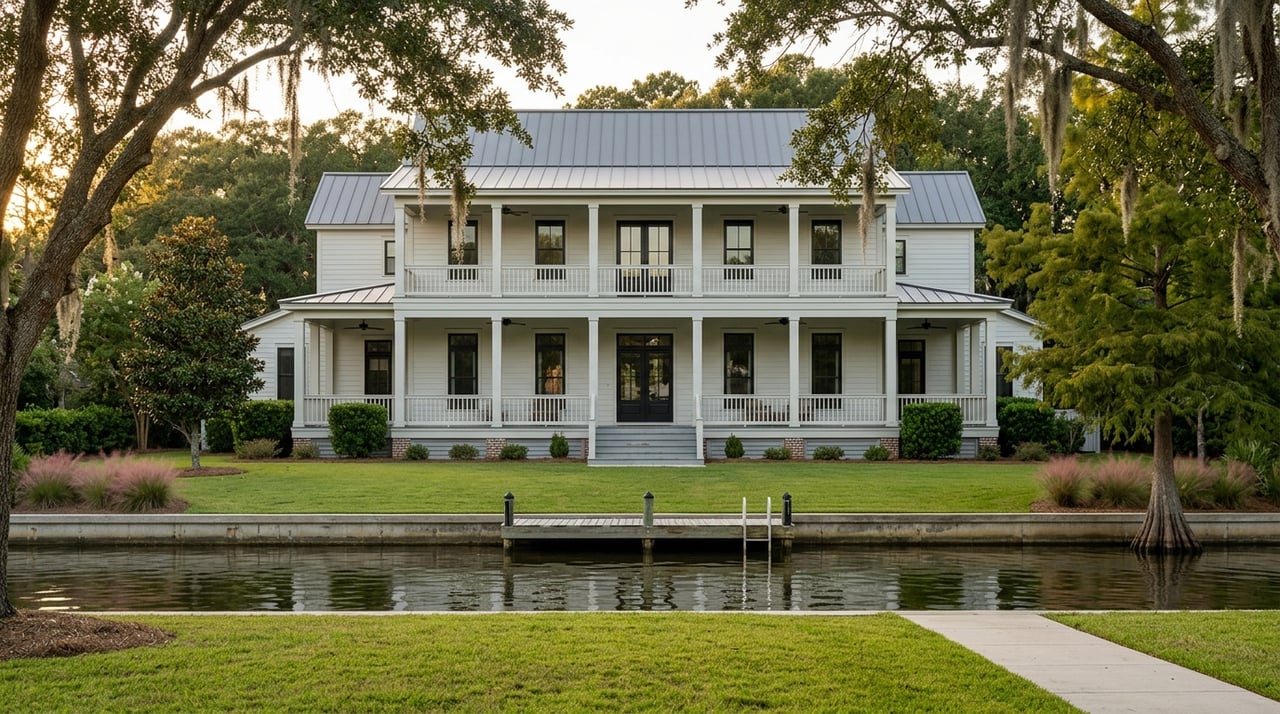
One of the first things to know is that Lacombe waterfront is not one single product type. You may find canal-front homes, bayou-front homes, and larger estate-style parcels with significant frontage. Recent examples in the market have included homes on more than an acre with extensive waterfrontage, protected docking areas, boathouses, and hoists.
That variety matters because two homes that both say “waterfront” may offer very different experiences. One property may be set up for more direct boating access, while another may offer a calmer setting with a more protected shoreline. Some are clearly built around active boat use, while others lean more toward scenery, outdoor entertaining, and privacy.
Many waterfront buyers in Lacombe prioritize features that support daily use of the water. Common features in listings include private docks, covered slips, hoists, boathouses, screened porches, under-home entertaining areas, and references to deep-water access. In practical terms, buyers here are often choosing a lifestyle property, not just a house with a view.
Boating and Outdoor Access Matter Here
If you want to spend time on the water, Lacombe has meaningful access points. The Bayou Lacombe Complex can be reached from Lake Pontchartrain and six boat launches, including one at Main Street in Lacombe and another U.S. Fish and Wildlife Service launch near the mouth of the bayou on Lake Road. St. Tammany Parish mapping also identifies a no-wake zone near the Highway 190 bridge by the Main Street launch.
For paddlers and nature-focused buyers, the setting is equally appealing. Big Branch Marsh National Wildlife Refuge identifies paddling and boating as visitor activities, and its Bayou Lacombe Visitor Center serves as a gateway to the refuge. The refuge’s trail system reaches the edge of Bayou Lacombe, which reinforces how closely connected the area is to outdoor recreation.
Local planning also shows continued interest in low-impact outdoor access. St. Tammany Parish planning documents for Lacombe Trace Trails and Nature Park describe proposed upgrades that would include a fishing dock, kayak launch, boardwalks, trails, pavilions, and picnic areas. While planning concepts are not the same as completed amenities, they do reflect the area’s outdoor-oriented vision.
Waterfront Function Can Vary by Parcel
In Lacombe, the practical function of a waterfront property can differ a lot from lot to lot. Some parcels may offer substantial frontage and easier navigation for larger boats. Others may be more protected, shallower, or better suited to kayaks, smaller vessels, or a view-first lifestyle.
That is why it helps to look closely at navigability rather than relying on the listing label alone. You will want to understand how the property connects to the broader bayou system, what water depth looks like under normal conditions, and whether the lot works for your specific boat or watercraft. A property that fits one buyer perfectly may not fit another if their boating needs are different.
The bayou system itself is also dynamic. Louisiana Department of Wildlife and Fisheries notes that local rainfall can significantly affect water levels, and high tides in Lake Pontchartrain can stop downstream flow. The same management plan states that invasive giant salvinia is present throughout the Bayou Lacombe Complex, which can affect shoreline appearance, maintenance planning, and boating conditions.
Flood, Insurance, and Resilience Questions
Buying on the water in Lacombe means thinking like a coastal property owner. St. Tammany Parish planning documents have directly linked local coastal land loss to increased hurricane and storm-surge vulnerability. That does not make waterfront ownership a poor fit, but it does mean resilience should be part of your decision-making from the start.
A key early step is verifying the property’s flood zone. FEMA flood maps show how a property relates to higher-risk flood areas, and lenders may use that information when determining insurance requirements. You should verify the exact address on the applicable flood map rather than assuming all waterfront homes carry the same level of risk or insurance cost.
It is also smart to budget for the reality that waterfront ownership often involves more ongoing oversight than an inland home. Insurance, elevation, drainage, shoreline condition, and storm preparedness all deserve attention during your due diligence period. In a market like Lacombe, these details are part of owning well.
Shoreline and Dock Due Diligence
Waterfront improvements deserve close review before you buy. If a lot has a dock, boathouse, bulkhead, hoist, or shoreline reinforcement, you will want to understand its condition, how it functions, and what future work may be needed. Those items can be central to the property’s value and your long-term enjoyment.
This is especially important in Lacombe because Bayou Lacombe is part of Louisiana’s Natural and Scenic Rivers System. State protections and guidance emphasize minimizing disturbance to streambanks and being careful with systems like septic near scenic rivers. If you are considering repairs, upgrades, or future improvements, the property’s setting may affect what work is appropriate.
A simple checklist can help you compare homes more clearly:
- Confirm the property’s flood zone for the exact address
- Ask about current flood insurance and lender requirements
- Review dock, boathouse, bulkhead, and hoist condition
- Ask about water depth in normal and lower-water conditions
- Check how the lot connects to the bayou and Lake Pontchartrain
- Understand no-wake zones or navigation limitations nearby
- Ask about vegetation management and shoreline maintenance
- Review any property systems near the water, including septic considerations
Who Lacombe Waterfront Best Fits
Lacombe tends to appeal most to buyers who want a quieter, more nature-immersed Northshore lifestyle. The area’s low density, high owner-occupancy rate, refuge-adjacent setting, and water access all support that impression. If you value privacy, larger lots, and direct connection to boating, fishing, kayaking, or birding, Lacombe may feel like a natural fit.
It may be less ideal if your top priority is a dense retail core or highly walkable commercial areas. The appeal here is different. In many cases, buyers are trading convenience to a concentrated town center for space, waterfront access, and a more tucked-away setting.
That tradeoff is often exactly the point. For the right buyer, Lacombe offers a kind of waterfront living that feels grounded, scenic, and deeply connected to the landscape. The key is making sure the parcel you choose matches the way you actually want to use the water.
If you are considering a waterfront purchase in Lacombe, having local guidance can make the process much clearer. From comparing navigability and lot function to evaluating waterfront improvements and lifestyle fit, Jennifer Rice can help you approach the search with confidence and a careful eye for what matters most.
FAQs
What makes Lacombe waterfront living different from other waterfront areas?
- Lacombe is a low-density, primarily owner-occupied community shaped by bayous, marshland, and protected natural waterways, so waterfront living here is typically more private, nature-oriented, and boat-access focused.
What types of waterfront properties can buyers find in Lacombe?
- Buyers may find canal-front homes, bayou-front homes, and larger estate-style parcels, with features such as docks, boathouses, covered slips, hoists, and significant waterfront frontage.
What should buyers check about boating access in Lacombe?
- Buyers should ask about water depth, navigability, connection to the bayou system, nearby no-wake zones, and whether the property suits their specific boat or watercraft.
What flood and insurance questions matter for Lacombe waterfront homes?
- Buyers should verify the property’s exact FEMA flood zone, ask how that affects insurance and financing, and treat the purchase as a coastal-property decision with resilience and storm-surge considerations.
What maintenance issues come with a Lacombe waterfront property?
- Waterfront ownership in Lacombe may involve shoreline upkeep, dock or bulkhead work, vegetation management, and planning around changing water levels and aquatic growth in the bayou system.
Who is a good fit for Lacombe waterfront living?
- Lacombe often fits buyers who want privacy, larger lots, boating or paddling access, and a quieter Northshore setting connected to nature rather than a dense town-center lifestyle.