If you plan to sell a horse property in Folsom, buyers will notice the details fast. They are not just looking at acreage or a pretty barn. They want to know whether the property is functional for horses, manageable in Louisiana weather, and properly documented for St. Tammany Parish. This guide will help you focus on the updates and records that matter most before your property goes to market. Let’s dive in.
Start With Local Compliance
Before you think about photos or listing copy, make sure your equestrian improvements line up with parish requirements. In St. Tammany Parish, private stables, pens, barns, sheds, and similar animal-related structures are regulated uses in residential districts. That means buyers may look closely at placement, drainage, and overall setup.
Roofed stables must have proper drainage, and pens and fences must be strong enough to retain animals. The parish also requires that no pen, fence, or similar enclosure sit closer than 20 feet to an adjacent property line. If your setup has changed over time, this is a good moment to confirm that the current layout still matches local rules.
Check Permit History Early
Permit records can become a major part of buyer due diligence, especially on acreage and horse properties. In St. Tammany, agricultural buildings without habitable space may be exempt from building inspections, but permits and inspections still apply when electrical, mechanical, plumbing, or gas systems are installed.
Even portable accessory structures under 200 square feet still require permits. If you added power to a barn, installed plumbing in a wash rack, or brought in a small storage building, gather those records now. Clean documentation helps reduce questions later.
Review Floodplain Documents
If any part of the property is in a floodplain, buyers will want clarity. The parish requires flood documentation and elevation certificates at multiple stages of the permit process for affected sites.
Before listing, pull together any elevation certificates, flood-related permit records, and notes on site improvements. Having those documents ready can make your property feel more transparent and easier to evaluate.
Improve Drainage and Mud Control
In Folsom, drainage is one of the first things experienced horse-property buyers assess. Louisiana’s hot, wet, humid conditions can quickly turn a usable setup into a muddy one if runoff is not managed well.
LSU AgCenter guidance recommends siting barns and shelters on higher, well-drained ground and avoiding drainage swales and poor-drainage areas. Runoff should move away from facilities, not toward stalls, paddocks, or work areas. If your barn gutters are missing, clogged, or dumping water into turnout space, fixing that issue can improve both function and presentation.
Focus on Barn Runoff
Simple drainage improvements can have an outsized impact. Gutters, downspouts, and splash blocks help keep roof runoff out of paddocks and stall areas.
As you prepare for market, walk the property after heavy rain if possible. Look for standing water near stalls, muddy gate openings, washed-out paths, and low areas around shelters. Those spots often shape a buyer’s first impression of usability.
Evaluate Sacrifice Areas
A sacrifice area or dry lot can be an important feature on a Louisiana horse property. LSU advises placing sacrifice areas on better-drained soils and away from waterways and wetlands.
If you already have one, make sure it is clearly defined, drained as well as possible, and easy to explain during showings. If you do not, you may still be able to identify an area that serves this purpose and include it in your site materials.
Refresh Fencing and Paddocks
Fencing carries a lot of visual and practical weight in an equestrian sale. Buyers want to see safe containment, easy circulation, and a layout that supports day-to-day horse use.
University of Minnesota Extension recommends highly visible fencing without sharp edges or barbed wire. It also notes that a perimeter fence of about 5 feet is a useful benchmark, with gates large enough for equipment. While every property differs, clean, sturdy, easy-to-read fencing tends to reassure buyers.
Repair What Buyers Will Notice
Walk every fence line before listing. Tighten loose boards or rails, replace damaged sections, clear vegetation that hides the fence, and make sure gates swing and latch properly.
Also check whether your paddock layout feels practical from the barn to turnout, feed storage, and work areas. Buyers often picture their daily routine as they tour, so smooth movement through the property matters.
Show How the Land Functions
Pasture layout matters almost as much as pasture size. Dividing larger areas into smaller paddocks can support rotational grazing, manure management, and weed control.
If your property already has multiple turnout areas, make that benefit visible. Mark paddock lines clearly, mow or tidy edges, and be ready to explain how the rotation works. A property that reads as organized and usable tends to stand out.
Present Pasture Honestly
Acreage alone does not tell the full story of a horse property. In Louisiana, pasture condition, forage type, drainage, and management all affect how useful the land really is.
LSU notes that many Louisiana horse operations rely on warm-season perennial grasses in spring and summer and cool-season annual grass in winter and early spring. Common grasses include bermudagrass, bahiagrass, Dallis grass, and annual ryegrass. Buyers may not expect a perfect pasture year-round, but they do want signs of sound management.
Address Overgrazing Before Listing
LSU gives a rough rule of thumb of about 2 acres of pasture to support one horse for an entire grazing season, while also noting that overgrazing is common on limited acreage. That makes condition more important than assumptions.
If your pasture is stressed, avoid overstating what it can support. Instead, mow, remove debris, control obvious weeds, and allow worn areas to rest where possible. If the property functions better as turnout or supplemental grazing, present it that way.
Use Accurate Capacity Language
Precise language builds trust. If the acreage falls below the rough 2-acre-per-horse benchmark, it is better to describe the setup as a small-farm, turnout, or supplemental-grazing property rather than imply fully self-sustaining pasture.
That kind of clarity helps attract buyers whose expectations match the land. It also keeps the marketing grounded in how the property actually performs.
Clean and Highlight Barn Features
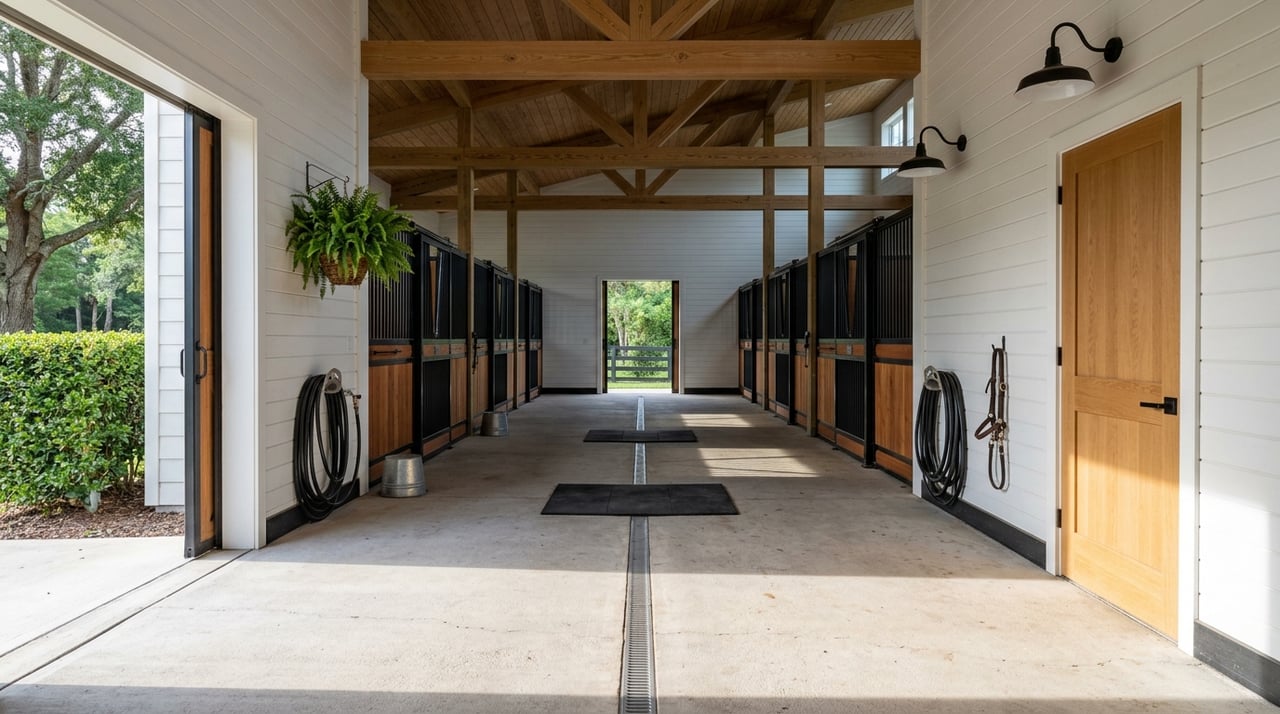
A horse barn should feel like a working asset, not just an outbuilding. LSU’s horse-building resources highlight practical spaces such as feed rooms, tack rooms, wash racks, work areas, foaling rooms, stalls, and indoor exercise space designed for Louisiana conditions.
You do not need every feature to make a strong impression. What matters is showing that the spaces you do have are functional, maintained, and easy to understand.
Prioritize Repairs That Support Use
Before listing, inspect stalls, doors, aisle surfaces, lighting, fans, water access, and storage spaces. Replace broken hardware, repair damaged boards, clear cobwebs, and remove unused equipment that makes the barn feel crowded.
If you have a tack room, feed room, wash rack, or designated work area, clean and stage each one so its purpose is obvious. Buyers respond well when they can immediately see how the property supports daily horse care.
Connect the House to the Horse Setup
If the residence is part of the sale, show how the home and horse operation work together. Buyers will look beyond the house itself and consider the path between the home, barn, turnout, water access, manure handling, and trailer movement.
Clear drive access, manageable circulation, and a logical relationship between structures can add real value. The goal is to help buyers understand the full lifestyle the property offers.
Prepare a Strong Listing Package
The best equestrian listings answer practical questions before buyers have to ask them. A well-prepared package can help your property feel more credible, especially for buyers comparing multiple acreage listings.
According to the research, one of the most useful tools is a site map or aerial. It should label acreage, paddock lines, barn footprints, gates, water sources, drive and trailer circulation, and any flood-prone areas.
Gather the Right Documents
Before your property hits the market, organize:
- Survey documents
- Permit records
- Elevation certificates, if applicable
- Maintenance notes for fencing
- Drainage improvement records
- Pasture rotation or land management notes
This kind of preparation helps buyers judge actual usability, not just appearance. It also supports smoother conversations once serious interest develops.
Document Any Flood Recovery
If the property has experienced flooding, do not leave buyers guessing. LSU advises waiting for flooded pasture to dry, checking for foreign objects and contaminants, clipping surviving forage appropriately, and keeping horses off the area until the pasture recovers.
If you completed cleanup or rehabilitation work, write down what was done and when. Clear records can help buyers understand both the event and the response.
Why Preparation Matters in Folsom
Folsom equestrian buyers tend to notice the difference between a property that looks rural and one that is ready for real horse use. In this market, presentation matters, but function matters just as much.
When your fencing is repaired, your drainage is addressed, your pasture is honestly represented, and your records are in order, your property tells a stronger story. It shows stewardship, reduces uncertainty, and helps the right buyer see the value more quickly.
Selling a distinctive horse property takes more than standard listing prep. If you are thinking about your next move in Folsom or elsewhere in St. Tammany Parish, Jennifer Rice offers tailored guidance for equestrian and acreage properties, backed by local market knowledge and concierge-level service.
FAQs
What should you fix first before listing a Folsom equestrian property?
- Start with drainage, fencing repairs, barn safety issues, and permit or floodplain documentation, since these are some of the first items horse-property buyers are likely to evaluate.
What fencing rules matter for horse properties in St. Tammany Parish?
- St. Tammany Parish requires pens, fences, and similar enclosures to be strong enough to retain animals, and no pen, fence, or similar enclosure may be closer than 20 feet to an adjacent property line.
What pasture details matter when selling a horse property in Folsom?
- Buyers will usually want to understand pasture condition, drainage, forage health, paddock division, and whether the acreage realistically supports grazing or works better as turnout or supplemental grazing.
What documents should sellers gather for a Folsom horse property listing?
- Useful documents include surveys, permit records, flood-related records or elevation certificates if applicable, and maintenance notes for fencing, drainage, and pasture management.
What makes a barn more marketable on a Folsom equestrian property?
- A clean, functional barn with well-maintained stalls, clear storage areas, practical work space, water access, and an easy connection to paddocks and trailer circulation will generally be easier for buyers to evaluate.