If you are dreaming about a horse property in Folsom, it helps to know that not every beautiful piece of land will function well for horses. In this part of St. Tammany Parish, the right purchase is about more than acreage alone. You also need to think about drainage, pasture layout, zoning, and day-to-day horsekeeping. This guide will walk you through what to look for so you can buy with more clarity and confidence. Let’s dive in.
Why Folsom appeals to equestrian buyers
Folsom sits within St. Tammany Parish’s rural Northshore landscape, where parish planning materials describe Rural/Agricultural areas as places for horse farms, ranches, timberlands, and very large single-family lots that are typically larger than three acres. That setting makes Folsom a natural fit if you want room for horses, equipment, and future improvements.
You will also find a wide range of equestrian property types in the local market. Recent listing snapshots show everything from a 3.05-acre mini-farm with a 3-stall barn to larger tracts over 35 acres with barns, lakes, cottages, and show-facility potential. In other words, Folsom is not just one type of horse market. It offers options for hobby owners, private riders, and buyers looking for a larger operational setup.
Another practical point matters here. Parish planning materials note that wells and septic systems are typical in these rural areas. That means your buying decision should include the land’s infrastructure from the beginning, not just the house and barn.
Start with the land, not the house
When you buy equestrian property, the land usually drives the long-term success of the purchase. A pretty home or an existing barn can be appealing, but poor drainage or weak pasture layout can create ongoing problems.
LSU AgCenter guidance recommends studying drainage patterns and soil types before building or making major site decisions. Barns and shelters should sit on higher ground with well-drained soils, while drainage swales and poorly drained areas are best avoided. Roof runoff should also be directed away from paddocks and stall areas with gutters, downspouts, and a designed drainage system.
In Folsom, this matters even more because rural usability can change with weather. Before you move forward, look closely at low spots, culverts, and ditch flow so you can better understand whether the property works year-round for horses.
What to inspect on the land
As you tour properties, pay special attention to these features:
- High ground for barns, shelters, and work areas
- Visible drainage patterns after rain
- Low spots that may hold water
- Ditches and culverts that affect runoff
- Soil condition in paddocks and around gates
- Access points for trailers and farm equipment
- Existing fencing and how paddocks are divided
- Space for future improvements such as an arena or additional turnout
A property can look open and usable on a sunny day but behave very differently during a wet stretch. That is one reason careful site review is so important.
How much acreage you may need
Acreage is one of the first questions most buyers ask, and the honest answer is that it depends on how you plan to use the property. LSU AgCenter offers a helpful rule of thumb: about 2 acres of pasture can support one horse for an entire grazing season. Still, management matters a great deal, and overgrazing can happen even on larger tracts.
If you plan to keep one or two horses for personal use, a smaller Folsom property may work if the layout is efficient and the land drains well. If you want multiple horses, more turnout flexibility, or room for additional facilities, you may need more acreage and a stronger pasture plan.
It also helps to think beyond the horse count you have today. You may want separate spaces for turnout, a sacrifice area for wet periods, trailer movement, hay or equipment storage, and possible expansion later.
Think in terms of use, not just size
A 5-acre property with good drainage, smart fencing, and workable pasture divisions may function better than a larger tract with mud problems and poor layout. When you compare properties, ask how the land supports your daily routine, not just how many acres appear on paper.
Pasture quality matters more than many buyers expect
Pasture can be a major asset, but only if it is established and managed well. LSU AgCenter recommends soil testing before seeding, with a target pH of 5.8 to 6.5 and repeat testing every 2 to 3 years. Common Louisiana horse forages include bermudagrass, bahiagrass, annual ryegrass, and clovers.
That guidance matters whether you are buying a finished horse property or raw land. If the pasture is thin, compacted, or poorly drained, you may be looking at improvement costs after closing.
Ask yourself practical questions during showings. Are the paddocks holding grass? Do the turnout areas show signs of overuse near gates or water sources? Is there enough division for rotation, or would the property need fencing changes?
Mud control should be part of your plan
Mud management is a recurring issue on Louisiana horse properties, and it is worth taking seriously before you buy. LSU AgCenter recommends a sacrifice area for wet periods, rotational grazing, and elevated placement of high-traffic zones such as gates, troughs, and shelters.
AgCenter guidance also notes that gently sloped ground, good surface drainage, and gravel or sand in problem spots can help reduce mud buildup. If a property already has chronic wet areas in the places horses gather most, that can affect both maintenance and usability.
Barns, arenas, and property layout
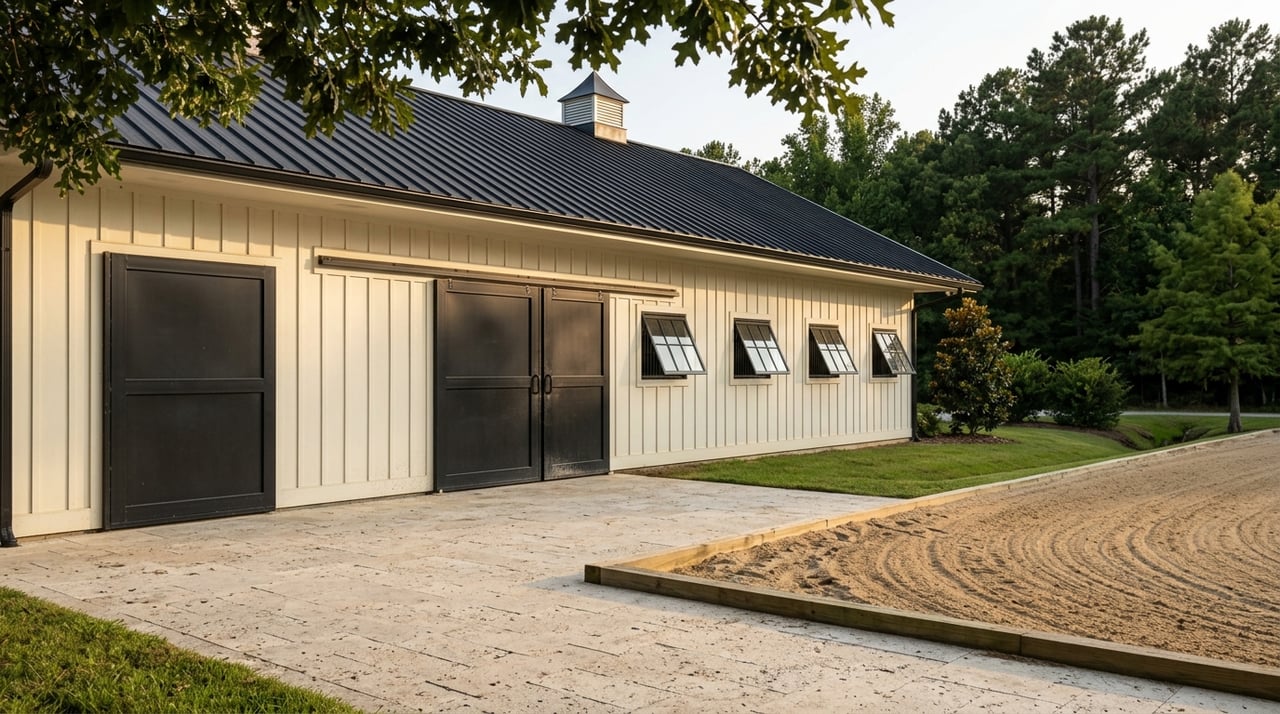
In Folsom, the right layout can make a property easier and more enjoyable to use every day. Some local properties already include features like tack rooms, wash racks, foaling stalls, run-in sheds, office space, and room to add an arena later. Others offer a simpler setup that may work well for private use.
LSU AgCenter recommends placing arenas on elevated, well-drained ground with gentle slopes that move water away from work areas. Gravel or sand can help in mud-prone spots, especially where horses and equipment create repeated traffic.
As you evaluate a property, think about how all the pieces connect. The distance from barn to turnout, trailer access, feed delivery, and future expansion space can all shape how functional the farm feels over time.
Layout questions to ask before you buy
Consider these questions as you compare properties:
- Is the barn placed on higher, well-drained ground?
- Do the paddocks connect logically to the barn and gates?
- Is there space for a round pen or arena later?
- Are high-traffic areas likely to stay usable in wet weather?
- Is trailer access simple and safe?
- Is there room for equipment, hay, and daily farm movement?
Good layout supports both convenience and stewardship. That is especially important on a property you plan to enjoy for years.
Zoning and site standards in St. Tammany Parish
Zoning can affect what you are allowed to keep, build, or expand, so it should be part of your due diligence early in the process. St. Tammany Parish’s zoning code allows a private stable, pen, barn, shed, or silo for raising, treating, or storing products raised on the premises, but there are site standards you need to understand.
For example, roofed stables must use materials that provide proper drainage. Fences or pens must be strong enough to retain animals and must be set back at least 20 feet from adjacent property lines. The code also states that the structure may not include a dwelling unit.
The parish’s Rural Overlay is intended to permit agriculture, preserve pasture and forest land, and retain rural land use patterns. Some large-lot residential districts also allow household agriculture and farm uses. This is one reason a horse property may sit in more than one zoning context, depending on the parcel and site standards.
Can you keep horses on a residential lot?
Sometimes, yes. In St. Tammany Parish, some residential and large-lot districts allow household agriculture or farm uses, but the specific property still needs to meet the applicable standards for drainage, setbacks, and site use.
That is why it is wise to evaluate both the zoning district and the physical layout of the site before you make assumptions about what is possible.
Wells, septic, and rural infrastructure
In Folsom’s rural and agricultural areas, wells and septic systems are common. That can be completely workable, but it adds another layer to your property review.
You will want to think about how the home, barn, and turnout areas interact with the site’s basic infrastructure. Water access, drainage flow, and the placement of improvements all matter on a horse property, especially when the land is expected to perform through changing seasons.
This is another reason buyers often benefit from a more detailed property review than they might use for a standard suburban home. On an equestrian purchase, the land systems matter as much as the structures.
Agricultural tax treatment is not automatic
Some buyers assume a rural property will automatically receive agricultural tax treatment, but Louisiana law does not work that way. Bona fide agricultural, horticultural, marsh, and timber land may be assessed at 10 percent of use value rather than fair market value, but the treatment is based on qualifying use and proper filing.
The owner must file an application with the parish assessor and sign an agreement. If eligible land is sold, the purchaser generally must sign a new application within 60 days if the land will remain eligible.
The main takeaway is simple. A tract may look rural, but favorable tax treatment depends on actual qualifying use and documentation, not appearance alone.
Folsom’s local horse community
Beyond the land itself, many buyers want to know whether there is an active horse community nearby. In Folsom, the answer is yes.
New Heights Therapeutic Riding Center sits on eight acres and includes a covered arena, a 16-stall barn, and access to 22 acres of wooded riding trails. Pony Power Folsom offers hunter/jumper lessons for ages 4 and up. The parish’s Tammany Trace also includes a parallel equestrian trail, and official trail rules require horses to stay in assigned areas, walk in designated horse areas, and provide a Coggins test.
These resources help show that Folsom is part of an established horse corridor on the Northshore. For many buyers, that local context adds value beyond the property lines.
A smart approach to buying equestrian property
Buying equestrian property in Folsom is part real estate search and part land evaluation. You are not just buying a home. You are buying drainage patterns, pasture potential, infrastructure, zoning fit, and the daily functionality of the farm.
The best purchase is usually the one that matches your horsekeeping goals now while still giving you room to adapt later. Whether you are looking for a small private setup or a larger farm with expansion potential, clear local guidance can help you ask the right questions from the start.
If you are considering a horse property in Folsom or anywhere on the Northshore, Jennifer Rice offers personalized guidance for buyers who want a thoughtful, detail-driven approach to acreage and equestrian real estate.
FAQs
How much acreage do you need for horses in Folsom?
- LSU AgCenter’s rule of thumb is about 2 acres of pasture per horse for a grazing season, but the right number can vary based on pasture quality, drainage, and management.
Can you keep horses on a residential lot in St. Tammany Parish?
- Sometimes yes, because some residential and large-lot districts allow household agriculture or farm uses, but the property still must meet applicable standards for drainage, setbacks, and site use.
Are wells and septic systems common on horse properties in Folsom?
- Yes. St. Tammany Parish planning materials say wells and septic systems are typical in Rural/Agricultural areas.
Does agricultural tax treatment happen automatically for rural land in Louisiana?
- No. Eligible land requires qualifying agricultural use and a filed application and agreement with the parish assessor, and a buyer generally needs a new filing after closing if the land remains eligible.
What should you inspect first on a Folsom horse property?
- Start with drainage, soil condition, high ground for barns and shelters, paddock layout, and infrastructure such as wells, septic, ditches, and culverts.
Is there an equestrian community near Folsom, Louisiana?
- Yes. Folsom is supported by resources such as New Heights Therapeutic Riding Center, Pony Power Folsom, and the equestrian trail along the Tammany Trace.