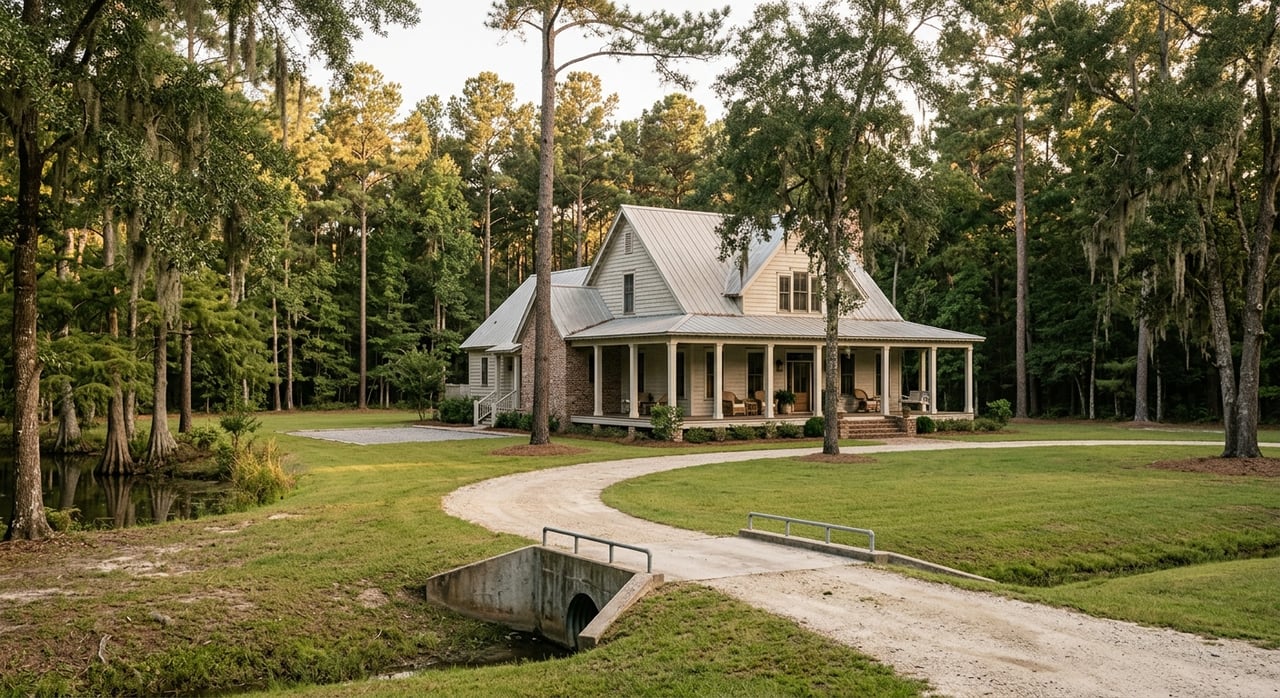
If you are thinking about buying acreage in Washington Parish, it is easy to focus on the big-picture appeal first. More space, more privacy, room for horses or recreation, and the possibility of timber or agricultural use can make rural land feel full of opportunity. But with acreage, the real story is always in the details, and knowing what to check before you buy can help you move forward with clarity and confidence. Let’s dive in.
Why Washington Parish Stands Out
Washington Parish offers a more acreage-oriented landscape than many nearby markets. According to the 2022 USDA Census of Agriculture county profile for Washington Parish, the parish had 815 farms, 96,444 acres in farms, and an average farm size of 118 acres.
That matters if you are looking for larger rural tracts with flexibility for long-term use. The same USDA profile also reports 32,665 woodland acres, which supports the parish’s reputation for timber, hunting land, pasture, and mixed-use acreage.
Washington Parish also supports more than one type of rural ownership. LSU AgCenter notes that the parish leads Louisiana in watermelon acreage and ranks among the top five for commercial vegetable, blueberry, and nursery crop acreage, showing that local land can support a range of agricultural uses beyond timber alone. Combined with rolling terrain and a rural character, that creates a different feel from more growth-pressured nearby areas.
Compare Tract Potential Carefully
Not every acreage parcel in Washington Parish will fit the same goal. One tract may work well for a homesite and pasture, while another may be better suited for timber management, recreation, or conservation use.
That is why your first question should not be, “Is this a good deal?” It should be, “What can this specific property actually support?” In rural land purchases, parcel-level due diligence usually matters more than general location.
Washington Parish vs. Rural St. Tammany
If you are comparing Washington Parish with rural St. Tammany, the acreage profile is different. The USDA county profile for St. Tammany Parish shows 61,455 acres in farms and an average farm size of 73 acres, compared with Washington Parish’s 96,444 acres and 118-acre average farm size.
In practical terms, Washington Parish may offer more opportunities for larger contiguous tracts and a stronger timber or wildlife orientation. That can appeal to buyers seeking equestrian land, recreational acreage, or long-range land stewardship.
Check Soils Before You Assume Buildability
One of the biggest mistakes acreage buyers make is assuming that open land is automatically buildable. In reality, soil conditions can affect homesite placement, drainage, pasture use, septic suitability, and how much improvement work may be needed.
The NRCS Web Soil Survey is the authoritative online source for current soil survey information. It can help you evaluate whether a parcel appears better suited for timber, pasture, food plots, a homesite, or more limited agricultural use.
Even so, online mapping is only a starting point. NRCS notes that on-site investigation is still needed in some cases, which is especially important if you plan to build or install onsite wastewater systems.
Review Flood Risk and Drainage Early
Flood risk is another issue that should be reviewed at the beginning of your search, not near the end. Washington Parish includes rolling hills, but that does not mean every tract has simple drainage or low flood exposure.
The LSU AgCenter FloodMaps portal explains that FEMA’s Flood Insurance Rate Maps are the official flood maps for Louisiana parishes. Before you move forward on acreage, verify the parcel’s flood zone, review drainage patterns, and check whether the intended homesite sits within a flood-prone area.
Nearby public lands help illustrate why this matters. The Bogue Chitto National Wildlife Refuge notes that more than 90% of the refuge can flood during winter and spring high-water periods, and Bogue Chitto State Park also identifies periodic flooding and wetlands mitigation as development challenges.
Rolling Terrain Changes the Equation
Topography in Washington Parish can create both opportunities and challenges. LSU AgCenter describes the parish landscape as rolling hills, and USGS groundwater information for the parish notes that the water-level surface generally follows topography.
For buyers, that can affect road placement, drainage, wet spots, and homesite selection. A parcel with beautiful elevation change may still need careful planning to identify the most practical location for access, construction, and water management.
Confirm Water, Septic, and Utilities
Rural acreage often requires more investigation into utilities than a typical residential lot. A tract may look ideal on paper, but your plans can change quickly if the site does not support a private well, septic system, or practical utility access.
USGS reports that water withdrawals in Washington Parish include both groundwater and surface water sources, with public supply and rural domestic use both present. The Louisiana Department of Health states that private wells are not regulated under the Safe Drinking Water Act, which means owners are responsible for sampling and maintenance, and onsite wastewater systems require permits and licensed installers.
Before you buy, it is wise to confirm:
- Whether public utilities are available nearby
- Whether a private well is likely to be feasible
- Whether the soils and site conditions appear suitable for septic approval
- Whether utility easements or extensions may be needed
Evaluate Timber as an Asset
In Washington Parish, timber may be part of the property’s value, but it should never be treated as a guess. If a seller mentions merchantable timber, you will want a more precise understanding of what is actually there.
Forestry is a significant part of the parish economy. LSU AgCenter reports that Washington Parish’s forestry and forest-products sector supported about 1,000 jobs, $64.1 million in labor income, and $468.3 million in total output in 2021. That scale helps explain why timberland can be a meaningful ownership category here.
Timber value, however, depends on more than tree count. LSU AgCenter stumpage reporting shows statewide averages can vary widely by species and product type, and the agency emphasizes that parish location, tree quality, and market access all affect pricing. If timber value is part of your decision, a current timber cruise and guidance from a consulting forester can provide a much clearer picture than a visual estimate.
Verify Access and Boundaries
With acreage, legal and physical access are essential. A beautiful tract can become complicated quickly if access is unclear, if property lines are not marked, or if utility easements are missing or poorly documented.
LSU AgCenter notes in its guidance on marked property lines that clear boundaries matter for timber sales, reducing conflict, and addressing trespass issues. For buyers, that makes a current survey, title review, and verification of recorded access key parts of the due diligence process.
This is especially important if you plan to use the land for hunting, timber harvest, equestrian use, or future improvements. You want clarity on exactly what you own, how you reach it, and what rights others may have across the property.
Understand Easements and Restrictions
Some Washington Parish tracts may be affected by conservation easements or wetland-related restrictions. These can be valuable if your goal is habitat preservation, recreation, or long-term stewardship, but they can also limit development and certain land uses.
The NRCS ACEP wetland reserve easement guide explains that easements may be permanent, 30-year, or term easements. Landowners retain title, but they must follow the restrictions that apply to the easement.
It is also important to know that public access is not automatic unless the owner specifically agrees to it. If an acreage parcel may be subject to an easement, title work should confirm exactly what is allowed and what is restricted before closing.
Consider Lifestyle and Recreation Value
For many buyers, acreage in Washington Parish is not only about utility. It is also about lifestyle. Access to fishing, paddling, birdwatching, and hunting can be part of the appeal, especially for those looking for a retreat property or a full-time rural setting.
The Bogue Chitto National Wildlife Refuge encompasses 36,500 acres and offers fishing, hunting, paddling, birdwatching, and nature photography. Bogue Chitto WMA and Bogue Chitto State Park add to the area’s outdoor appeal, which can make nearby private acreage especially attractive to buyers who value recreation and natural surroundings.
At the same time, proximity to public land can increase the importance of boundary marking, access control, and a clear understanding of where your private property begins and ends. That is another reason parcel-level diligence matters so much.
A Smart Acreage Buying Checklist
Before you commit to a tract in Washington Parish, make sure you are asking the right questions early:
- Can the parcel support your intended homesite?
- What do the soils suggest about building, drainage, pasture, or septic?
- Is any part of the tract in a FEMA flood zone?
- How will water and wastewater be handled?
- Is the access legal, usable, and clearly documented?
- Are boundaries marked and supported by a current survey?
- Does the tract include timber with verified value?
- Are there conservation easements or use restrictions on title?
- Do topography and drainage support your long-term plans?
If you approach acreage this way, you can evaluate land with much more confidence and avoid expensive surprises later.
Buying rural property is often more nuanced than buying a finished home, but it can also be deeply rewarding when the land truly matches your goals. If you are considering acreage in Washington Parish or comparing land opportunities across the Northshore region, Jennifer Rice offers thoughtful, high-touch guidance for complex property searches and can help you evaluate the details that matter most.
FAQs
What should you check before buying acreage in Washington Parish?
- You should review soils, flood zone, drainage, access, boundary surveys, utility availability, well and septic feasibility, timber value, and any easements or title restrictions.
Can you build a house on any acreage parcel in Washington Parish?
- No. Buildability depends on parcel-specific factors such as flood risk, soils, septic suitability, water source, access, and any legal restrictions affecting the tract.
Does timber add value to land in Washington Parish?
- It can, but timber value should be verified through a current timber cruise and professional review because value varies by species, quality, and market access.
How do you check flood risk for land in Washington Parish?
- You can start with the official FEMA flood maps through the LSU AgCenter FloodMaps portal and then evaluate drainage, topography, and the intended homesite area more closely.
Can conservation easements affect acreage use in Washington Parish?
- Yes. Conservation easements can limit development and certain land uses, so title work should confirm whether an easement exists and what restrictions apply.
Why is Washington Parish attractive for larger acreage purchases?
- USDA data shows Washington Parish has a larger average farm size and more farmland acreage than nearby St. Tammany, which can make it a stronger fit for buyers seeking larger rural tracts.